5StepLabs
A software lab based in India, accelerated by AI, with Elon Musk’s 5-step algorithm at its core.
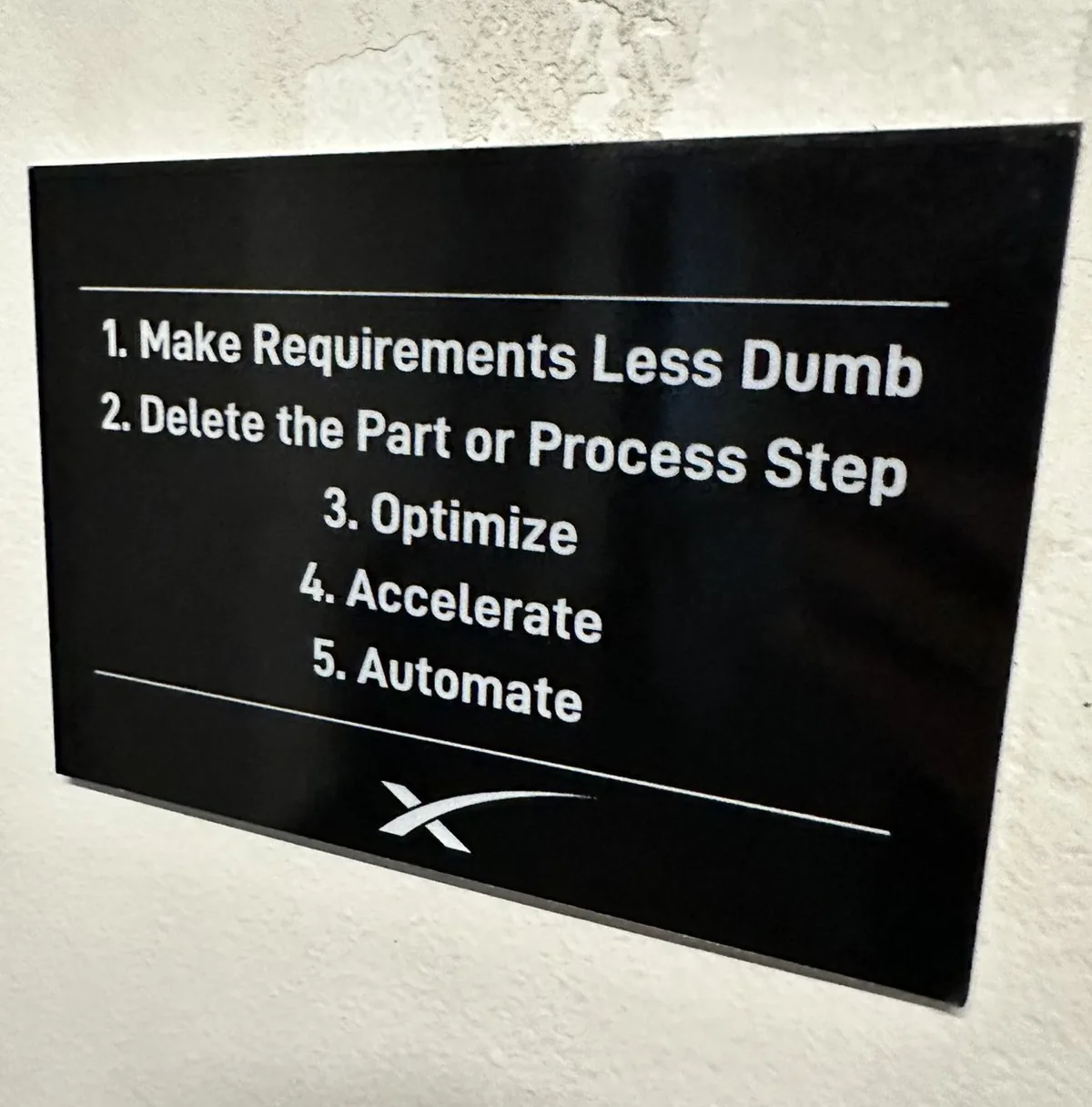
Five steps, in order.
The algorithm was written for building rockets. It works just as well on software, and the order is the whole point — most teams start at step five.
-
1
Make requirements less dumb
Every requirement is suspect, including the ones we wrote ourselves. Most of what a product “must” do was inherited, not decided.
-
2
Delete the part or process step
If we don’t end up adding back about a tenth of what we removed, we didn’t remove enough. A deleted part is the most reliable part.
-
3
Optimize
Only after deleting. Optimizing something that shouldn’t exist is the worst kind of work there is.
-
4
Accelerate
Speed up what survived the first three steps. Never speed up something that should have been cut.
-
5
Automate
Last. A process automated before it was simplified is just a mistake running faster.
5 Step Algorithm Applied
Three generations of one engine.
Fewer parts each time. More thrust each time. Step two, held to for five years.
-
185 tfthrust3,630 kginstalled mass
Every line, sensor and shield sits on the outside, where a hand can reach it.
-
230 tfthrust2,875 kginstalled mass
Parts merged into castings, most of the plumbing gone. Lighter and stronger at once.
-
250 tfthrust1,720 kginstalled mass
Nothing left on the outside. The heat shield wasn’t redesigned, it was deleted.
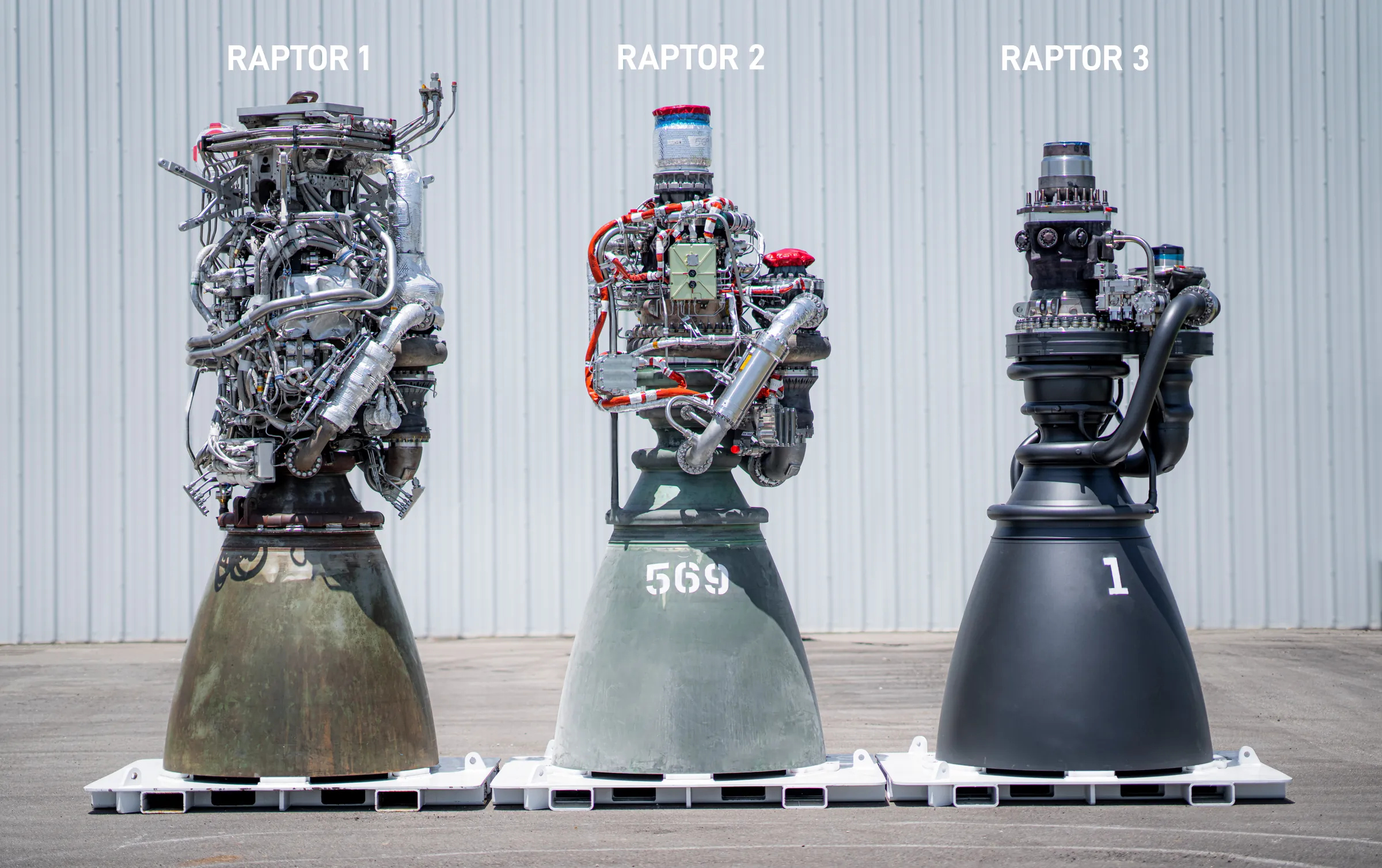
Fifty-three percent lighter. Thirty-five percent more thrust. Fewer parts to build, fewer parts to fail.